
Insights & how-tos for smarter financial decisions
Short posts and guides written for busy owners — fast reads with real actions. Topics include tax tips, bookkeeping best practices, growth planning, and product updates.
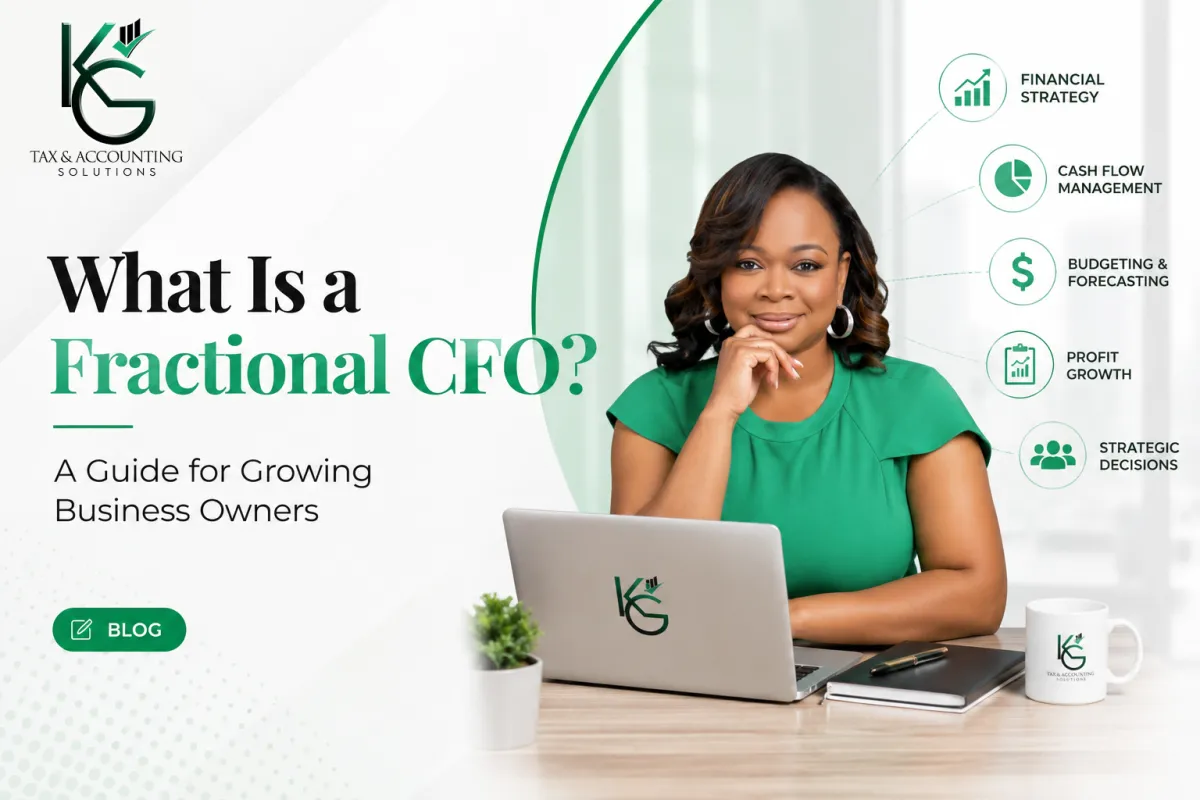
What Is a Fractional CFO? A Guide for Growing Business Owners
As a business grows, managing its finances often becomes more complicated. Revenue may be increasing, but so are expenses. Hiring decisions become more significant, cash flow needs more attention, and business owners may find themselves asking bigger questions about profitability and long-term growth.
At this stage, basic financial reporting may no longer provide all the guidance a business owner needs. You need to understand not only what happened financially last month, but also what those numbers mean for the decisions you need to make next.
That is where a fractional CFO can help.
But what is a fractional CFO, and how do you know when your business is ready for one? A fractional CFO provides businesses with experienced financial leadership without requiring them to hire a full-time Chief Financial Officer. For growing businesses, this can provide access to higher-level financial strategy while keeping costs manageable.
What Is a Fractional CFO?
A fractional CFO is a financial professional who provides CFO-level services to a business on a part-time, outsourced, or contract basis.
Instead of working exclusively for one organization as a full-time executive, a fractional CFO typically provides ongoing financial guidance based on the specific needs of the business.
The goal goes beyond maintaining accurate financial records. A fractional CFO helps business owners understand their financial position, identify opportunities and risks, develop forecasts, manage cash flow, and make more informed decisions.
For small and growing businesses, this creates an opportunity to gain strategic financial expertise before the organization is large enough to justify hiring a full-time CFO.
What Does a Fractional CFO Do?
The responsibilities of a fractional CFO can vary depending on the size, goals, and financial complexity of a business. In general, the role focuses on using financial information to guide better business decisions.
Common fractional CFO services include:
Financial Reporting and KPI Tracking
Financial statements contain valuable information, but business owners need to know what that information means. A fractional CFO can identify key performance indicators (KPIs) and monitor trends that reveal how the business is performing.
Instead of simply looking at revenue, for example, a company might monitor profit margins, operating expenses, cash flow, customer acquisition costs, or other metrics relevant to its goals.
Cash Flow Management
A profitable business can still experience cash flow problems. Timing differences between incoming revenue and outgoing expenses can create challenges, particularly during periods of rapid growth.
A fractional CFO helps businesses better understand and anticipate cash needs so leadership can prepare for upcoming expenses, investments, and potential shortfalls.
Budgeting and Forecasting
A budget provides a financial framework for the business, while forecasting helps leadership anticipate what may happen based on current trends and future plans.
These tools can help answer questions such as:
Can we afford to hire additional employees?
How will a major investment affect cash flow?
What happens if revenue grows faster or slower than expected?
How much capital might we need for expansion?
Are expenses increasing faster than revenue?
Having financial projections allows business owners to evaluate these decisions before committing resources.
Profit and Pricing Strategy
Growing revenue does not automatically mean growing profit. A business may increase sales while simultaneously dealing with higher operating costs or shrinking margins.
A fractional CFO can analyze profitability, expenses, and pricing to help identify where the company may be overspending, underpricing its services, or missing opportunities to improve margins.
Financial Systems and Processes
As companies grow, the financial processes that worked when the business was smaller may become inefficient.
A fractional CFO can help improve financial workflows, reporting processes, automation, and internal procedures so leadership receives reliable information without unnecessary administrative complexity.
Fractional CFO vs. Accountant: What's the Difference?
Accountants and fractional CFOs can both play important roles in a financially healthy business, but their responsibilities are different.
Accounting generally focuses on accurately recording, organizing, and reporting financial activity. This includes maintaining financial records, reconciling accounts, preparing statements, and supporting tax preparation.
A fractional CFO takes those financial records and uses them to help guide future decisions.
Think of accounting as helping you understand what happened, while CFO services help you determine what should happen next.
For example, an accountant may provide a profit and loss statement showing that expenses increased during the previous quarter. A fractional CFO may take that information further by identifying which expenses are increasing, determining how those costs are affecting margins, forecasting what will happen if the trend continues, and helping leadership develop a strategy.
Businesses often need both accurate accounting and strategic financial guidance.
When Does a Business Need a Fractional CFO?
There isn't one specific revenue level or company size that determines when a business needs CFO support. Instead, business owners should pay attention to the complexity of their financial decisions.
You may benefit from a fractional CFO if:
Revenue is growing but cash still feels unpredictable.
You have difficulty understanding where your profits are going.
You are preparing to hire employees or expand operations.
Your company lacks a formal budgeting or forecasting process.
You need better visibility into financial performance.
Pricing decisions are being made without detailed margin analysis.
You are preparing for a significant investment or expansion.
Financial decisions are taking more of the owner's time.
Your business has outgrown its existing financial processes.
The common theme is complexity. As financial decisions become more important to the company's future, having experienced guidance becomes increasingly valuable.
What Are the Benefits of a Fractional CFO?
One of the biggest benefits of a fractional CFO is access to strategic financial expertise without maintaining a full-time executive position.
But cost is only part of the equation.
A fractional CFO can also provide greater financial clarity. Instead of making decisions based primarily on instinct, business owners can use current financial information and forecasts to evaluate their options.
Better financial visibility can also make it easier to identify potential problems earlier. If expenses are climbing, margins are shrinking, or cash flow is becoming tight, recognizing the trend early provides more time to respond.
Fractional CFO services can also help create accountability. Regular financial reviews and KPI tracking keep important financial goals visible instead of allowing them to disappear behind daily operations.
Ultimately, the goal is to help business owners feel more confident about the financial decisions they make.
How a Fractional CFO Can Help You Plan for Growth
Growth creates opportunities, but it also requires careful financial planning.
Opening another location, adding employees, purchasing equipment, launching a new service, or investing in marketing can all require significant capital. Making these decisions without understanding their financial impact can put unnecessary pressure on cash flow.
A fractional CFO can build forecasts and financial scenarios that allow business owners to evaluate different possibilities.
For example, instead of simply asking, "Can we afford to hire three more employees?" leadership can evaluate the additional payroll costs, expected revenue contribution, available cash, and how long it may take for the investment to generate a return.
Scenario planning can also help businesses prepare for uncertainty. Leadership can compare optimistic, expected, and conservative projections and determine what actions may be necessary under each scenario.
This turns financial planning into an ongoing part of business strategy rather than something that only happens at tax time.
How Financial Strategy and Tax Planning Work Together
Financial decisions made throughout the year can affect a company's tax position. That is why financial strategy and tax planning should not operate completely independently.
Business structure, investments, expenses, compensation, cash flow, and growth decisions can all have tax implications.
Coordinating financial planning with tax strategy can give business owners a more complete view of their finances. Instead of waiting until tax season to discover the impact of decisions that have already been made, businesses can consider potential tax implications while planning throughout the year.
This is especially valuable as businesses become more profitable and their financial situations become more complex.
Is a Fractional CFO Right for Your Business?
If your business is growing and your financial decisions are becoming more complicated, it may be time to consider whether CFO-level guidance could help.
Ask yourself whether you can confidently explain your current cash flow, profit margins, financial projections, major KPIs, and the financial impact of your next major business decision.
If those answers are difficult to determine, additional financial leadership could provide valuable clarity.
KG Tax & Accounting Solutions provides Fractional CFO and Financial Planning services designed to help business owners better understand their numbers and use them to plan for the future. Services include financial reporting, KPI dashboards, cash flow management, budgeting and forecasting, profit strategy, financial workflows, and strategic tax positioning.
With the right financial information and a strategy behind it, business owners can spend less time guessing and more time making informed decisions about where their business goes next.

Reliable Tax & Financial Solutions for a Secure Future, Start Today!
We are committed to providing trusted, expert-driven tax and financial solutions designed to secure your financial future.
Client reviews
How We’ve Helped Our Clients
Absolutely phenomenal service! I came to Keesha with a daunting $23,000 tax liability, and through her expertise, attention to detail, and strategic approach, she reduced it to zero. I was blown away by her professionalism, clear communication, and commitment to getting the best possible outcome for me. Keesha explained everything in a way I could understand, found deductions and credits I never knew I qualified for, and handled the process with confidence and integrity. If you want results, honesty, and true tax expertise, this is the firm you need. Highly recommend to anyone serious about saving money! I recommend anyone/everyone in business to get the tax planning assessment!!!!

Mrs. Keesha is the tax GOAT! She is very professional and went above and beyond for my husband and I. I promise you, you can not go wrong using K.G. Tax & Accounting Solutions for all your tax and business needs.

I’m so happy to have found you online by searching for a tax preparation and professional lady. You helped me in more ways than one. I give you five stars.

K.G did my taxes this year and I was fully satisfied! She was able to get my taxes done within a week. I reached out to her thinking I would need to file an extension but she told me that we would meet the deadline and we did! Very professional, efficient and pleasant. I would recommend.

Mrs. Ezell has been doing my taxes for several years. She is professional, knowledgeable, prompt and affordable. I am very satisfied with her service.

For those seeking reliable tax services or an accountant, K.G Tax & Accounting Solutions is highly recommended. They keep abreast of tax laws, ensuring that detailed information is always available. The customer service and the depth of knowledge they provided to my husband and me were especially noteworthy. Having a dependable partner is crucial for financial management. As a small business owner, it's important to have someone who grasps the financial dos and don'ts for your business and can assist in optimizing all aspects for financial success. Their professionalism and tax expertise are outstanding! Mr. & Mrs. Carter

Transparency Review- my taxes was a “MESS” not a little one either a “BIG MESS” I absolutely love Keesha she saves my life every year and helps me move my business in a positive direction 🥰. Goes above and beyond all year round not just tax time. Very down to earth and knowledgeable.…

Reliable. Transparent and Personable. Well use again!




Join Our Mailing List
Subscribe for timely tax reminders, money tips, and exclusive discounts on our digital tools.
frequently asked questions
Find Quick Answers
Do you file federal and state tax returns?
Yes! We prepare federal and state returns. Multi-state filings are supported; fees apply for state-specific filings.
Are you licensed/insured?
Our staff includes experienced accounting professionals and we carry professional liability coverage.
How do I upload my documents?
Use our secure app or Google Form. You’ll receive a secure link after booking.
What payment methods do you accept?
We accept major credit cards, ACH transfers, and business checks.
What if I need ongoing support?
Choose from our Essential, Growth, or Elite packages, or request a custom engagement.
Read Our Blog


Quick Links
Resources
Legal
Connect With Us
Follow Us


© Copyright 2026. K.G. Tax & Accounting Solutions - All Rights Reserved