13-Week Cash Flow Forecast Guide for Small Businesses
Running a profitable business does not always mean having enough cash available to cover expenses. You might have strong sales, a growing customer base, and healthy profit margins, yet still struggle to make payroll or pay vendors when bills come due.
For many small businesses, the problem is not necessarily a lack of revenue. It is a lack of visibility into when money will actually enter and leave the business.
A 13-week cash flow forecast helps solve this problem by providing a detailed, week-by-week projection of expected cash inflows and outflows over the next three months.
Instead of reacting to financial surprises, business owners can anticipate potential cash shortages, plan upcoming expenses, and make more informed decisions.
What Is a 13-Week Cash Flow Forecast?
A 13-week cash flow forecast is a short-term financial planning tool that estimates how much cash a business will receive and spend during each of the next 13 weeks.
Unlike an annual budget or traditional financial projection, this forecast focuses specifically on the timing of cash movement.
It typically includes:
Beginning cash balances
Expected customer payments
Payroll and employee-related expenses
Rent, utilities, and operating costs
Vendor and supplier payments
Loan payments and tax obligations
Planned equipment purchases
Projected ending cash balances
By organizing these figures into weekly periods, business owners can identify when available cash may become limited.
For example, your business might expect $80,000 in customer payments over the next month. However, if most payments arrive during the final week while payroll and vendor obligations are due earlier, you could experience a temporary cash shortage.
A 13-week forecast makes that timing problem visible before it becomes urgent.
Why Small Businesses Need Short-Term Cash Flow Forecasting
Many business owners rely on their current bank balance to determine whether they can afford upcoming expenses.
Unfortunately, a bank balance only reflects cash available at one moment. It doesn't account for obligations not yet paid or customer payments that haven't arrived.
As discussed in our article on why cash flow matters for business growth, increasing revenue does not automatically translate into stronger financial stability.
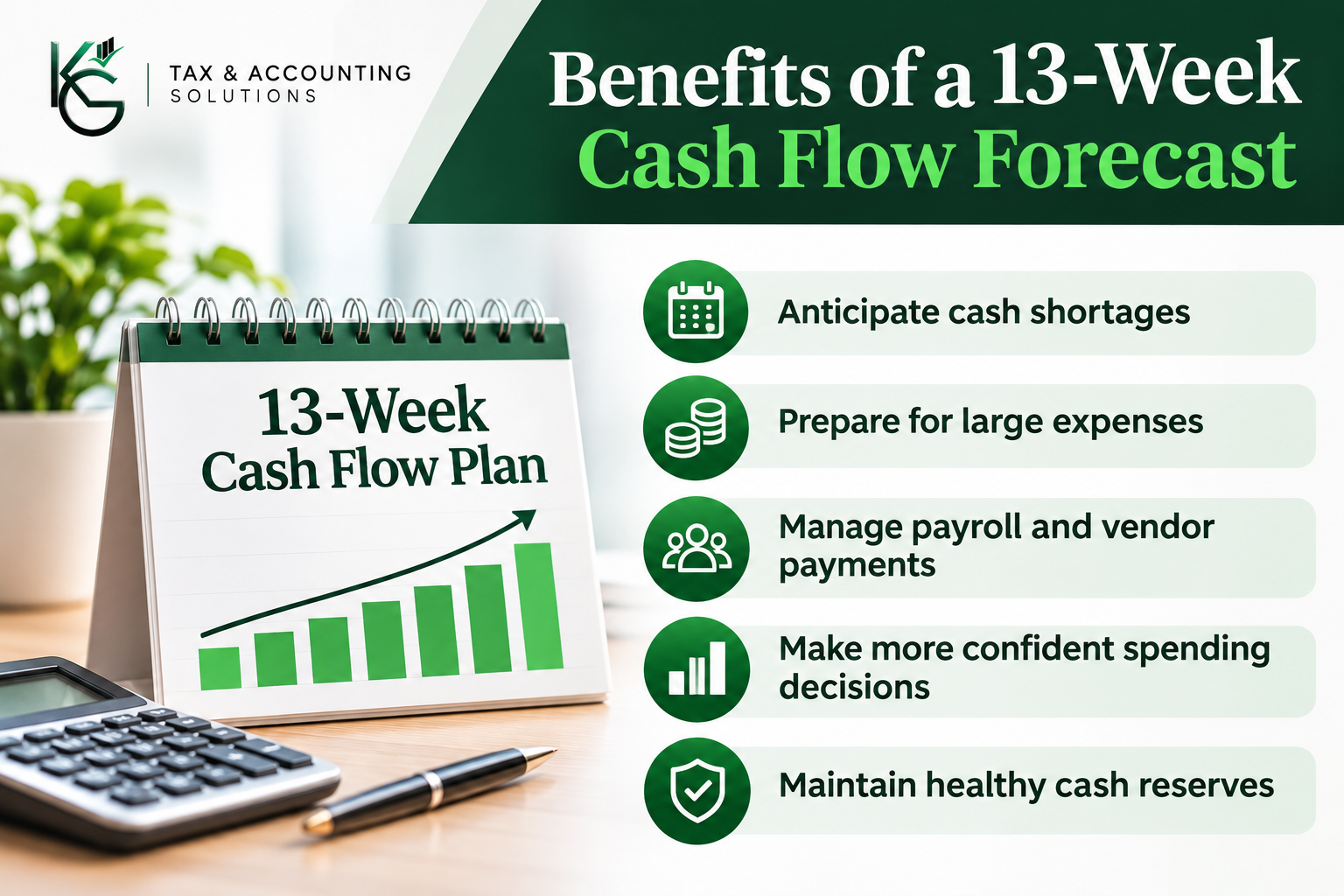
Short-term cash flow forecasting helps businesses:
Anticipate upcoming cash shortages
Prepare for large or irregular expenses
Monitor customer payment patterns
Evaluate spending decisions
Maintain appropriate cash reserves
Reduce reliance on emergency financing
This visibility is particularly valuable for businesses with seasonal revenue, lengthy customer payment terms, or significant payroll and inventory expenses.
How to Build a 13-Week Cash Flow Forecast
Creating a useful cash flow forecast does not require complicated financial software. A well-organized spreadsheet can provide a starting point.
However, accuracy depends on using realistic assumptions and updating projections regularly.
Step 1: Determine Your Beginning Cash Balance
Start with the actual amount of cash available in your business accounts.
This becomes your opening balance for the first week.
Avoid including money that has not yet been received, such as outstanding customer invoices. Those amounts belong in your projected cash inflows.
Also distinguish between unrestricted operating cash and funds reserved for specific obligations.
Step 2: Estimate Weekly Cash Inflows
Next, identify when your business expects to receive money.
Common cash inflows include customer invoice payments, recurring service revenue, retail sales, deposits, and other expected receipts.
The key is estimating when payments will arrive rather than when sales occur.
For example, if customers typically pay invoices 45 days after receiving them, your forecast should reflect that collection pattern.
Reviewing accounts receivable reports and historical payment behavior can help make these estimates more realistic.
Step 3: Identify Upcoming Cash Outflows
List the expenses your business expects to pay during each week.
These may include payroll, rent, insurance, software subscriptions, supplier invoices, loan payments, and taxes.
Remember to include irregular expenses that may not appear every month.
Annual insurance premiums, equipment purchases, quarterly tax payments, and seasonal inventory orders can create significant cash demands.
Missing these obligations can make an otherwise accurate forecast misleading.
Step 4: Calculate Your Projected Ending Balance
Once expected cash inflows and outflows are identified, calculate the projected ending balance for each week.
Use this formula:
Beginning Cash + Cash Inflows - Cash Outflows = Ending Cash Balance
For example:
Cash Flow Category | Week 1 |
|---|---|
Beginning cash | $25,000 |
Expected cash inflows | $18,000 |
Expected cash outflows | $30,000 |
Projected ending cash | $13,000 |
The projected $13,000 ending balance becomes the beginning balance for Week 2.
Repeat this calculation across all 13 weeks to understand how cash availability may change.
Step 5: Review and Update the Forecast Weekly
A cash flow forecast should never remain static.
Each week, replace estimates with actual results, investigate significant differences, and update expectations for future payments and expenses.
Add another week to maintain a rolling 13-week outlook.
Our guide to financial forecasting for small businesses explains how regularly updated projections support better financial planning and business decisions.
5 Warning Signs a Cash Flow Forecast Can Reveal
A 13-week cash flow forecast does more than estimate future account balances. It can highlight financial risks that might otherwise go unnoticed.
1. Customer Payments Are Arriving Too Slowly
If receivables consistently arrive later than expected, your business may struggle to meet obligations despite generating sufficient sales.
Reviewing payment terms, invoicing procedures, and collection practices can help improve cash flow consistency.
2. Large Expenses Are Concentrated in Certain Weeks
Payroll, insurance, taxes, and vendor payments may fall within the same period.
A forecast helps identify these expense spikes so you can evaluate payment timing and prepare sufficient reserves.
3. Cash Reserves Are Gradually Declining
A business might maintain positive cash balances while consistently spending more than it receives.
If projected ending balances decrease week after week, the forecast may reveal a longer-term financial concern requiring attention.
4. Growth Is Creating Additional Cash Pressure
Hiring employees, purchasing inventory, and expanding operations often require spending before additional revenue arrives.
Before committing to these investments, review our article on how to know if your business can afford to hire, expand, or invest in growth.
5. The Business Has Limited Flexibility
Even when projected cash balances remain positive, operating too close to zero leaves little room for unexpected expenses or delayed payments.
Forecasting helps business owners evaluate whether additional cash reserves or financing arrangements may be appropriate.
How a Fractional CFO Improves Cash Flow Forecasting
Building a spreadsheet is only the first step. The real value comes from understanding what the numbers mean and using them to guide decisions.
A Fractional CFO can help business owners develop more reliable cash flow projections, identify financial risks, and create strategies for improving working capital.
Through professional Fractional CFO and Financial Planning services, businesses can receive support with:
Cash flow management: Monitoring cash availability and identifying opportunities to improve financial stability.
Budgeting and forecasting: Developing realistic projections based on business performance.
Scenario planning: Evaluating how delayed payments, rising expenses, or changes in revenue could affect available cash.
Financial reporting: Tracking important metrics that support informed decisions.
Strategic planning: Aligning financial resources with hiring, expansion, and other business objectives.
For growing businesses, this level of financial guidance can be especially valuable when decisions become more complex.
Take Control of Your Business Cash Flow
Cash shortages rarely happen without warning. In many cases, the warning signs are already present in unpaid invoices, upcoming obligations, changing expenses, or declining reserves.
The challenge is recognizing those patterns early enough to respond.
A 13-week cash flow forecast gives small business owners a practical way to understand upcoming financial demands, prepare for uncertainty, and make decisions with greater confidence.
At K.G. Tax & Accounting Solutions, our Fractional CFO and Financial Planning services help businesses improve cash flow visibility, strengthen financial forecasting, and develop strategies that support sustainable growth.
Ready to stop guessing about your business's financial future? Contact K.G. Tax & Accounting Solutions to learn how professional financial planning can help you take greater control of your cash flow


